The buyer has researched your business. They understand the offer. The meeting went well.
Now they need to “discuss it internally”.
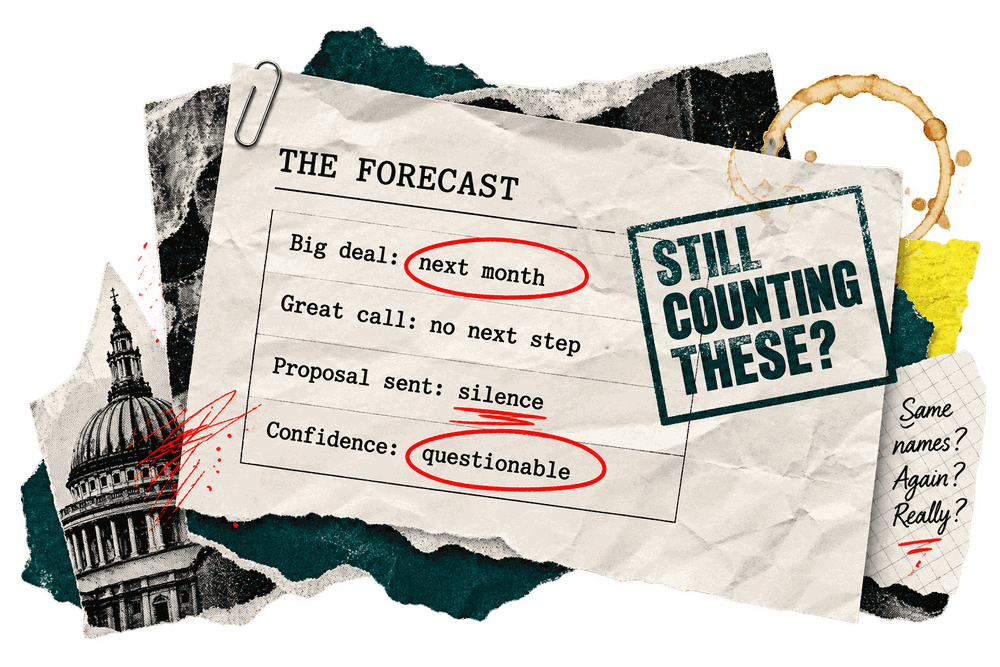
Three weeks later, your salesperson is still following up, and the deal is still sitting in the forecast.
When I look at why B2B deals stall, I want to understand what the buyer still needs to decide. Sending another case study is only useful if a lack of evidence is actually the problem.
My view is that we’re too quick to confuse an informed buyer with a confident one.
They can know what you do, like your approach and believe you could help, while still feeling unable to commit.
More research doesn’t settle every question
Gartner’s March 2026 research found that 67% of B2B buyers preferred a rep-free experience. The survey covered 646 buyers, with 45% reporting that they had used AI during a recent purchase.
It would be easy to read that and conclude that buyers want salespeople out of the way.
I think that misses something.
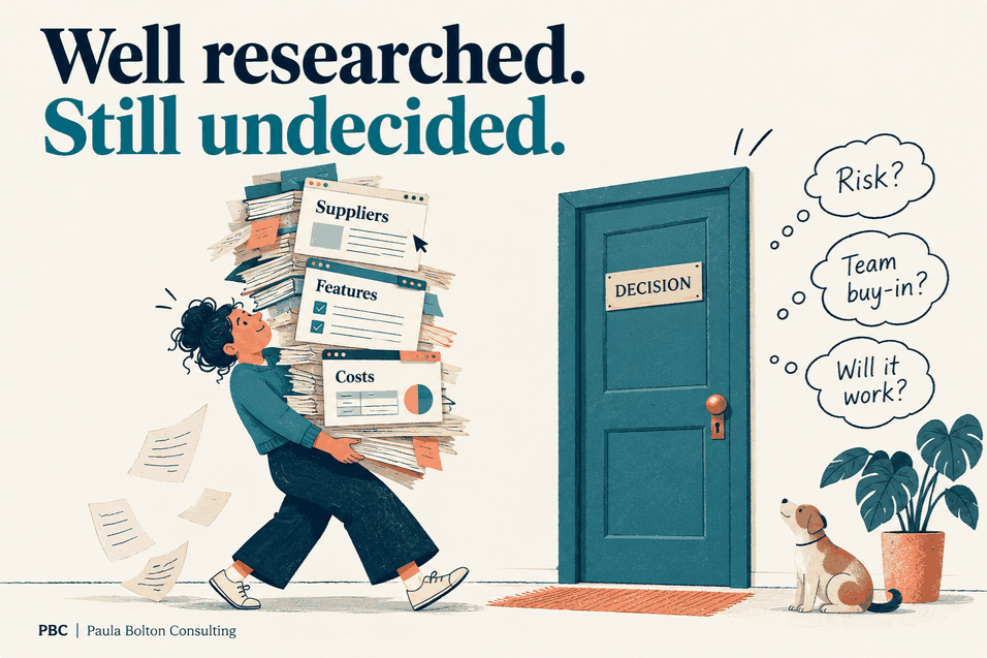
Your buyer can use AI to compare suppliers, review features and prepare questions. That still leaves them responsible for recommending the right investment to their business.
Who will challenge it? What will implementation involve? What happens if the promised result doesn’t materialise?
Your Gartner conference report adds another useful finding: 69% of B2B buyers still prefer to validate AI-generated insights with sales reps.
These are separate findings, rather than a direct comparison of the same respondents. But they challenge the idea that independent research removes the need for a useful sales conversation.
The opportunity is to help buyers make sense of what they’ve found and what it means for their business.
Interest can make a pipeline look healthier than it is
Across PBC’s work reviewing more than 3,000 sales calls and analysing thousands of lost opportunities, weak buying intent, inconsistent qualification and stalled decisions have helped shape the standards we use.
That is why I want opportunities to earn their place in a pipeline through buyer action.
“They liked the presentation” tells me something about the meeting.
“They’ve arranged a discussion with the finance director to agree the investment criteria” tells me something about the purchase.
Those are very different signals.
A request for a proposal can feel like progress. Sometimes it is. Sometimes the buyer is gathering options without an agreed budget, a clear priority or anyone willing to own the decision.
Before treating that proposal as a likely sale, I want to know what will happen to it once it lands.
Three questions to ask when B2B deals stall
I would start with these before increasing the follow-up frequency.
1. What still needs to be resolved before you can make a decision?
This gives the buyer room to explain the actual difficulty.
They might be unsure about the investment. They might need a clearer implementation plan. They might have a colleague who sees the problem differently.
Each answer calls for a different response.
Ask the question, then resist the urge to fill the silence with another explanation of your offer.
2. Who else needs to be comfortable with this, and what will matter to them?
Your contact may understand the value perfectly well.
The person approving the budget may be thinking about cash flow. The person responsible for delivery may be worried about disruption. Another stakeholder may believe the current approach is good enough.
I want those concerns visible while there is still time to address them.
A proposal written only for your main contact can leave them doing a considerable amount of selling on your behalf.
3. If you decide to leave things as they are, what happens?
There needs to be a credible reason to act.
That might be lost revenue, avoidable workload, customer risk or an opportunity the business cannot pursue with its current approach.
Sometimes the honest answer is that very little happens.
That matters too. If the problem has no meaningful consequence and no priority, the opportunity may need to come out of this quarter’s forecast.
I would rather have that clarity than another reassuring conversation about a decision that keeps moving.
Give the next conversation a purpose
Here’s an illustrative example.
A buyer says they need to speak to their operations director before committing.
A familiar response would be:
“No problem. I’ll send the proposal and check in next week.”
I would suggest something more useful:
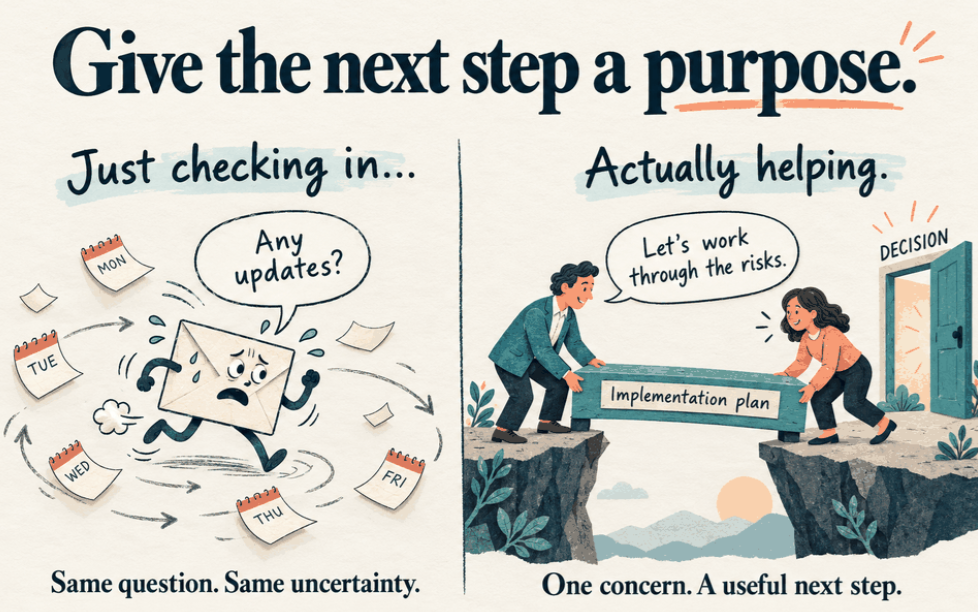
“What will your operations director need to understand before they can support this? If the main concern is disruption, we can work through the implementation steps together and make sure the proposal addresses them.”
Now the seller has something specific to help with.
They might agree a short implementation discussion, clarify who needs to attend and document the questions that must be answered.
That creates a next step with a purpose. It also gives the seller better evidence of whether the opportunity is progressing.
Before you chase the deal again
Take one stalled opportunity from your pipeline and ask:
-
What decision is the buyer trying to make?
-
What remains unresolved?
-
Who needs to be involved?
-
What has the buyer agreed to do next?
If the answers are vague, that is where I would put the effort.
More follow-up can create more activity without making the decision any easier.
A good sales conversation should leave the buyer better able to decide and the seller better able to judge the opportunity.
If too many good conversations are ending in drifting proposals, explore how PBC helps improve pipeline and conversion.
Paula 🙂