
Sales process implementation that turns opportunities into revenue
Your pipeline shouldn’t depend on individual habits, hopeful forecasts or somebody remembering what needs to happen next.
PBC helps you build and embed a stronger sales system across qualification, CRM, pipeline management, sales conversations, proposals and follow-up, so your team knows what good looks like and more opportunities keep moving towards a decision.
Start with a short conversation about what’s happening in your business.
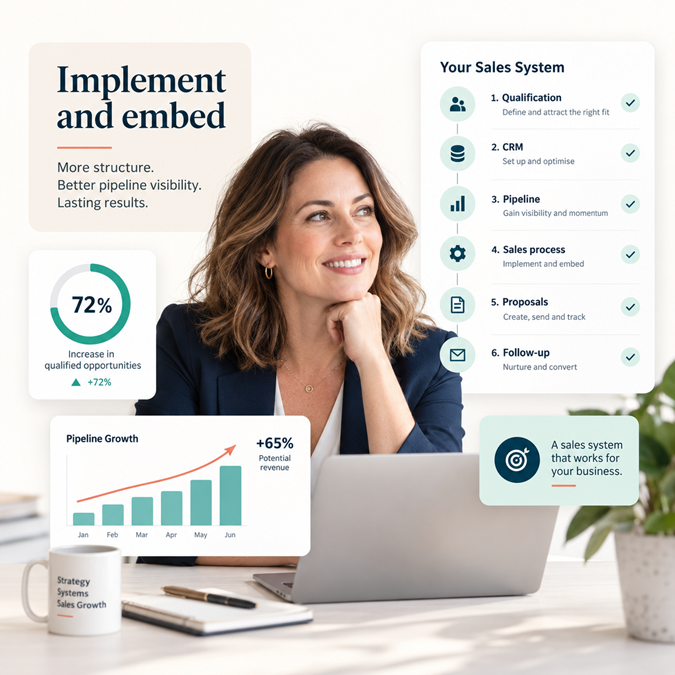
Is your sales process getting in the way of revenue?
Most businesses don’t need more sales activity. They need a clearer way to qualify opportunities, manage the pipeline, move deals forward and follow up consistently.
The signs usually show up in places like these. →
01
too few converting
Enquiries are coming in, but too many disappear, stall or turn out to have been poor opportunities from the start.
02
There’s plenty sitting in the CRM, but it’s difficult to tell which opportunities are progressing and which are simply still open.
03
Different people ask different questions, so the quality of opportunities entering the pipeline varies far more than it should.
04
Quotes and proposals are sent before the decision process, urgency, stakeholders or next steps are clear enough.
05
Some opportunities are managed closely. Others depend on memory, individual habits or how busy the salesperson happens to be that week.
06
You’re still stepping into deals, checking follow-ups, challenging the pipeline or reminding people what needs to happen next.
A busier pipeline won’t solve an inconsistent sales process.
Sales process implementation gives your team a clearer way to turn opportunities into revenue.
PBC helps you improve qualification, CRM, sales pipeline management, proposals, follow-up and deal progression, then embed those changes into the way your team works.
Sales problems rarely sit in one part of the process
Qualification affects pipeline quality. Pipeline quality affects forecasting. CRM discipline affects what you can see. And what happens after the sales call determines whether good opportunities keep moving.
Sales process implementation works best when those parts are connected.
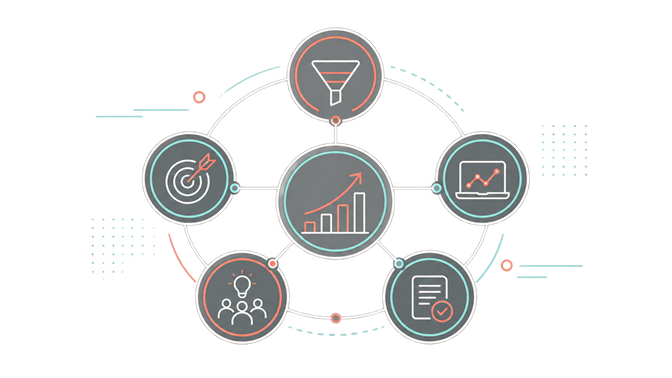
QUALIFICATION
Are the right opportunities getting into the pipeline, with clear criteria for fit, need, urgency and buying intent?
PIPELINE
Do your stages reflect buyer progress, with clear next steps and enough information to manage opportunities properly?
CRM
Does your CRM give you a reliable view of sales activity, pipeline quality, deal progress and where attention is needed?
DEAL PROGRESSION
Do discovery, proposals, follow-up and next steps help buyers keep moving towards a decision?
SALES MANAGEMENT
Are pipeline reviews, KPIs, forecasting and accountability helping your team make better sales decisions?
Changing one part of the sales process can help, but problems often reappear somewhere else if the surrounding system hasn’t changed with it.
For example, better lead generation won’t improve revenue if qualification is weak. A cleaner CRM won’t make the forecast more useful if opportunity stages and close dates still mean different things to different people.
Sales process implementation connects the parts, so your team has a clearer way to qualify, manage and convert opportunities.
The parts of your sales system we can improve and build.
The structure, tools and working rhythm left behind.
From agreeing the priorities to embedding the changes.
Build a sales system that gives you more control over revenue
Sales process implementation can involve one part of the system or several. That can include positioning and buyer fit where the problem starts before the sales conversation.
We focus on the areas creating the biggest commercial problems, then build the structure, tools and working rhythm your team needs to improve them.
Qualification and
buyer fit
Are the right opportunities getting through?
We sharpen qualification, discovery questions and disqualifiers so your team can spot fit, urgency and buying intent earlier.
CRM and
pipeline
Can you trust what your pipeline is showing you?
We improve CRM stages, fields and next-step rules so your pipeline is clearer, easier to manage and more useful.
Sales process and deal progression
Does your team know what moves a deal forward?
We build clearer stage rules and next steps so opportunities progress for the right reasons, not just because they were moved in the CRM.
Proposals and
follow-up
Are deals slowing down after the proposal is sent?
We strengthen proposal timing, follow-up and next-step expectations so good opportunities keep moving towards a decision.
Reporting and
forecasting
Can you trust what the pipeline is telling you about future revenue?
We improve reporting, close-date discipline and forecasting so you have a clearer view of what is likely to convert.
Sales management and accountability
Is the process still working once everybody gets busy?
We build the review rhythm, KPIs and accountability needed to keep the sales process working consistently.

A sales system your team can keep using
The work is built into your business, not handed over as a set of recommendations.
What you leave with will depend on what needs changing, but typically includes the structure, tools and management rhythm needed to keep the improvements working.
01
A defined sales process
Clear stages, responsibilities and expectations from initial enquiry through to close.
02
Qualification framework
Practical criteria and discovery prompts to help your team decide what should, and shouldn’t, enter the pipeline.
03
CRM and pipeline rules
Clearer stages, fields, next steps and opportunity rules so the CRM supports the sales process rather than getting in its way.
04
Sales tools and templates
The prompts, proposal guidance, follow-up tools and working documents your team needs at the points they’ll use them.
05
Reporting and review rhythm
A practical structure for pipeline reviews, forecasting, KPIs and identifying where management attention is needed.
06
A process embedded with the team
Changes are tested through live sales activity, adjusted where necessary and put into day-to-day use rather than left as theory.

A sales system built to work in practice
We work through the changes using your CRM, your opportunities and your sales team, so the finished system reflects how your business needs to sell.
Sales systems shaped by commercial experience
We’ve spent more than 20 years selling, leading teams, building businesses and working inside commercial functions.
That experience matters when you’re changing a sales process. The new structure has to work with real opportunities, real people, competing priorities and revenue targets attached to the outcome.
PBC combines sales process consultancy with hands-on commercial experience across sales, marketing, CRM, leadership and operations.
We’ve reviewed more than 3,000 sales calls and analysed 2,040 lost B2B opportunities, giving us a deep evidence base for understanding where qualification breaks down, deals lose momentum and sales processes stop supporting the team.
We know what implementation looks like when the business is busy.
We’ve built commercial functions, introduced new processes, managed pipelines and teams, and made sales decisions inside businesses of our own and for growing organisations.
That means we’re looking at whether the system will work in practice, whether the team can use it consistently and whether it gives you better control over sales performance.
17% Revenue growth in one quarter
One of our clients achieved 17% revenue growth in a single quarter after we improved their sales systems, sales enablement, pipeline management and sales execution.
20+ years
Sales, leadership and commercial implementation experience.
2
Businesses sold. Built, scaled and successfully exited
Experience across the whole commercial picture
Our experience spans sales, marketing, CRM, leadership and operations, so changes are made with the wider revenue picture in mind.
Built sales and commercial functions from the ground up
We’ve created sales processes, tools, reporting and management rhythms inside growing businesses, then had to make them work when things got busy.
SOME OF THE BUSINESSES WE’VE WORKED WITH
SUSTAINABLE
From review to working sales system
The Strategic Sales Audit is completed in four clear stages. We start with what you’re seeing in the business, examine the evidence behind your sales performance, then turn the findings into clear priorities and a practical 90-day action plan.
1
Review what’s happening now
We start with a focused review of your current sales process, CRM, pipeline and team rhythm.
2
Agree the priorities
We identify the areas creating the biggest commercial problems and agree what needs fixing first.
3
Build and implement
We improve the process, tools, CRM and management rhythm around your live sales activity.
4
Embed and refine
We test the changes, adjust what needs improving and make sure the new system is being used consistently.
We start by understanding what’s happening now
Most Sales System Implementation work begins with a focused review, so we can see where the biggest gaps sit and agree what needs changing first.
Start with the level of support you need
If you already know your sales process needs work, we can talk through what needs changing and whether Sales System Implementation is the right fit.
If you’re still trying to work out where the biggest gaps are, start with the five-minute sales diagnostic.
See where your sales process may be breaking down
Answer a short set of questions and get a score across the key areas of your sales performance.
It’s a quick way to see where the biggest gaps may sit before deciding what to tackle first.
Talk through what needs fixing in your sales process
Book a free 30-minute conversation to discuss what’s happening now, where the biggest issues appear to sit and whether Sales System Implementation is the right next step.
Questions about improving and implementing your sales process
If you’re weighing up whether this is the right next step, these answers cover how it works, how long it takes and what you’ll get from it.
Sales process implementation is the practical work of turning the way you want sales to operate into a process your team can follow consistently.
It can include qualification, discovery, CRM stages, pipeline management, proposals, follow-up, forecasting and sales management. The aim is to create clearer rules around how opportunities are assessed, progressed and managed from first enquiry through to close.
Common signs include plenty of activity without consistent revenue, poor-quality opportunities entering the pipeline, deals regularly stalling, unreliable forecasts, inconsistent follow-up and sales depending too heavily on the owner or sales leader.
Sales process improvement focuses on finding where those problems sit and changing the structure around them.
A large pipeline doesn’t necessarily mean there are enough strong buying opportunities in it.
Weak qualification, outdated close dates, unclear next steps, inconsistent sales stages and stalled opportunities can all make a pipeline look healthier than it is.
Better sales pipeline management makes it easier to see what is progressing, what is at risk and what is unlikely to convert.
A sales process consultant helps businesses improve how sales works across the whole customer journey.
At PBC, that can include qualification and discovery, CRM and pipeline structure, deal progression, proposals and follow-up, reporting, forecasting and sales management.
The work is shaped around the areas creating the biggest commercial problems rather than applying a standard sales process to every business.
Usually not.
Many CRM problems come from the way the system has been structured or used rather than the platform itself.
We can improve stages, fields, next-step rules, close dates, loss reasons and reporting within your existing CRM where it’s suitable. If the technology itself is limiting the sales process, we’ll identify that as part of the review.
Most Sales System Implementation projects begin with a focused review of what is happening now.
If the problem is already clear, that review can form the first stage of the implementation work.
If sales performance is inconsistent and you’re unsure whether the underlying issue sits in positioning, pipeline, conversion, leadership or visibility, the Strategic Sales Audit is usually the better starting point.
It depends on how much needs changing.
A focused piece of sales process improvement may involve one or two areas, while a broader implementation can include qualification, CRM, pipeline management, forecasting and management rhythm.
We agree the priorities, scope and working approach before implementation begins, then build and test the changes around live sales activity.
Yes, but the quality of the output depends heavily on the sales system and data underneath it.
AI can help with call analysis, research, CRM summaries, follow-up, reporting and identifying patterns across sales activity.
Clear qualification criteria, reliable CRM data, meaningful sales stages and consistent processes give AI better information to work with and make its outputs more useful.
Sales System Implementation sits between diagnosis and ongoing sales leadership.
If you’re not yet clear what is causing inconsistent sales performance, the Strategic Sales Audit is usually the best place to start. It identifies where the biggest issues sit and what needs attention first.
If you already know the sales process needs improving, Sales System Implementation focuses on building and embedding the changes across areas such as qualification, CRM, pipeline management, proposals, follow-up, forecasting and sales management.
If you need ongoing leadership, accountability and support around the team, pipeline and forecast, Fractional Sales Leadership provides that longer-term commercial oversight.
For specific skills gaps, Sales Workshops and Masterclasses can support areas such as discovery, qualification, deal control and sales conversations.